CSR 2 Realistic Drag Racing
- 4.6
- Rating
- 50.00M
- Installs
- Free
- Price

 Analysis by App-foxy
When I first spent time with CSR 2 Realistic Drag Racing, I understood why it has become such a familiar name on mobile. It is a racing game built around short, highly focused drag races rather than long circuits. You launch, shift, manage the car’s timing, and then decide what to improve before the next run. That simple rhythm makes it easy to pick up for a few minutes, but the collection and upgrade side gives it more staying power than a quick arcade racer.
That format works particularly well on a shared phone or tablet. One person can complete a race during a spare moment, hand the device over, and another player can look through the garage or try a run without needing a long uninterrupted session. I would not describe it as a conventional family game, though. It is a Teen-rated title, includes optional purchases ranging from $0.99 to $119.99 per item, and its progress is personal enough that household users should agree on boundaries before passing the device around.
How the drag-racing loop feels in everyday use
The core appeal is concentration. A race may be brief, but it asks me to pay attention to the start, the shift timing, and the condition of the car I have chosen. There is no need to learn a large track or remember a complicated route. Instead, I am trying to execute a clean sequence and understand why one result was better than another.
You May Also Like

 Blood Strike: 2.5 Anniversary
Blood Strike’s Loadouts Turn Every Drop Into a Tactical Gamble
A close look at Blood Strike’s custom loadouts: how fast access to signature weapons reshapes its battle royale rhythm, rewards preparation, and narrows the gap between fights.

 Pandora - Music & Podcasts
Pandora’s Music Is Easy to Start, but Harder to Recover
Pandora’s strength is its low-effort path from a seed to a station. Its weak spot is how much confidence it asks you to place in connection, setup, and quiet recovery.

 8 Ball Pool
 Is Built on Rivalries, Rematches, and Routine
A close look at the rivalries, rematches, shared routines, and unanswered safety questions that turn a quick pool match into a persistent mobile community.

 Samsung Music
’s Quiet Strength Is Playing What You Already Own
Its reach comes less from spectacle than from dependable access to a personal library. That simplicity is both the app’s strongest retention engine and its ceiling.

 AccuWeather: Weather Radar
AccuWeather Review: A Quick, Clear Forecast for Everyday Decisions
For everyday plans, the best forecast is the one you can understand quickly. AccuWeather makes rain timing, radar, and local conditions easy to act on, with a few trade-offs.

 Hill Climb Racing
Why Hill Climb Racing Still Turns Crashes Into One More Run
A tiny car, a bumpy hill and one more upgrade: Hill Climb Racing keeps resurfacing because its simple chaos makes every near-miss feel personal.
More From Our News Desk



That makes the game a good fit for small gaps in the day. I can play while waiting for an appointment, take a few turns during a break, or complete a short session before putting the phone away. The drawback is that “just one race” can easily become a longer visit once I start comparing cars, checking upgrades, or trying to improve a disappointing result. The short races are convenient, but the surrounding collection loop encourages me to continue.
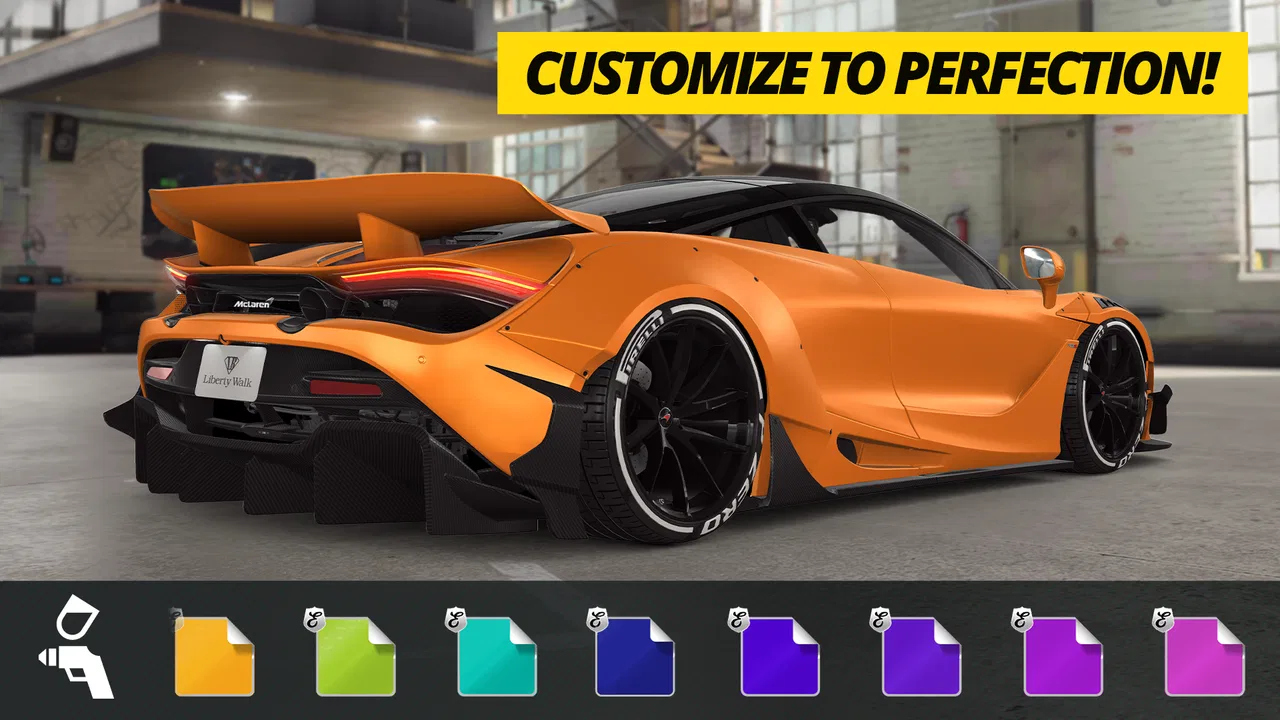
The garage is more important than the race itself for long-term players. Building a dream collection gives the game a clear sense of ownership, and choosing which car deserves attention creates meaningful decisions. I found that this is where the experience separates itself from a basic drag-racing toy. The question is not only whether I can win the next run, but whether improving one vehicle is a better use of my resources than developing another.
That choice is also useful in a shared-device setting. If several people use the same device, it helps to decide whether the game belongs to one player or whether everyone is simply taking turns with one profile. Mixing those approaches can create arguments: one person may be trying to build a carefully planned collection while another spends resources on a car they personally prefer. The game does not become less enjoyable because of that, but the household needs a clear agreement.
What makes the driving satisfying
The satisfaction comes from precision rather than steering. Players who want open circuits, drifting, jumps, or free-roaming exploration may find the structure narrow. I enjoy it when I want a compact test of timing and preparation, but I would not choose it as my only racing game if I wanted varied tracks or a sense of physically driving through a world.
There is a nice learning curve in recognizing that a loss is not always solved by pressing faster. Sometimes the better answer is to review the car choice, improve the right part, or change the way I approach the start and shifts. That creates a useful habit: after a poor result, I try to identify the cause instead of immediately spending everything available.
My practical advice is to treat the garage as a planning screen, not a shopping screen. Before committing resources, I look at which car I actually use and whether the improvement supports the type of races I am currently attempting. This avoids a common mobile-game mistake: spreading upgrades across too many vehicles and ending up with a collection that looks impressive but lacks one dependable option.
Starting on a shared phone or tablet
For a household, the first question is not whether the game is entertaining. It is whether everyone understands whose progress is being changed. A parent might install it for a teenager, while a younger child later asks to try it. That is where the Teen rating matters. I would not treat the game as automatically suitable for every child simply because the races are short or the presentation is colorful.
I also recommend agreeing on purchase rules before the first session. The game is free to download, but optional in-app purchases can be substantial at the upper end. That does not mean a player must spend money to enjoy the racing, but it does mean a shared device should not be treated as a completely consequence-free environment. The person responsible for the device should make the payment expectations clear, especially if more than one account or user profile is involved.
A simple household arrangement works best: one person owns the main garage, other users can race only with permission, and nobody changes purchase settings or spends resources without asking. This is not a feature claim about the game; it is a practical way to prevent confusion when a single screen is shared. If several people want independent collections, separate devices or clearly separated accounts are a better arrangement than trying to make one garage serve everyone.
Another useful boundary concerns play time. Because races are quick, the game can feel harmless to reopen repeatedly. I have found that the collection side makes sessions less predictable than the race length suggests. A player may finish a run and then spend more time deciding what to do next. For a shared household, setting a stopping point after a number of races or a fixed period is more realistic than assuming the short format will regulate itself.
Keeping progress and responsibilities clear
Coordination becomes important when the device moves between people. I would avoid handing over the phone in the middle of a decision about upgrades, because the next player may not know which car was being saved for later. A quick verbal rule helps: race if you like, but leave the garage and resources alone unless the owner agrees.
This is especially relevant for younger players who may enjoy the immediate action without caring about long-term collection planning. That is not a criticism of them; it is simply a mismatch between two ways of playing. One person sees a car as a tool for the next race, while another sees it as part of a carefully built collection. Both approaches are valid, but they should not be forced into the same progress path.
If I were organizing use on a family tablet, I would create a small routine. The owner starts by explaining which car is available, the guest plays a few races, and the device returns without changes to upgrades or purchases. This turns the game into a shared activity rather than an accidental competition over a single save. It also gives the guest a chance to learn the timing without being responsible for decisions they do not understand yet.
The same idea applies between adults. A partner may be happy to try a race but have no interest in maintaining the collection. In that case, the cleanest approach is to treat the game as one person’s hobby and the other person’s occasional turn. That sounds obvious, but the distinction matters when improvements, currency, and preferred cars are involved.
Age, trust, and the purchase question
The Teen content rating should be part of the decision, not a detail to ignore. I would be comfortable discussing the game with an older teenager who understands racing, digital purchases, and the difference between a free download and optional spending. I would be more cautious with a younger child, particularly on a device connected to a payment method.
Trust is not only about money. It also covers whether a player can follow agreed limits, accept losing a race, and leave another person’s collection untouched. The game’s competitive structure can make improvement feel urgent, especially when a player believes one more upgrade will solve the problem. A household conversation about patience and spending is worthwhile before the game becomes a regular habit.
For adults who dislike purchase pressure in mobile games, the safest mindset is to enjoy the driving loop as it is and regard spending as optional rather than necessary. I would not install it for someone who wants a completely open-ended, one-time-purchase racing experience with no collection decisions or monetization considerations. A premium console-style racer may be a better match for that preference, even if it offers less convenience on a phone.
On the other hand, players who like collecting cars, making incremental improvements, and repeating a short challenge may find the structure compelling without paying. The important trade-off is patience. A player who wants every desirable car or upgrade immediately is more likely to feel pressure than someone who enjoys working with a limited garage and improving through repeated attempts.
Performance, access, and the practical setup
The game is available as a free racing title from Zynga, and its broad adoption is reflected in an average rating of 4.6 from around 5.3 million ratings, with over 50 million installs. Those figures suggest a well-established mobile audience, but popularity does not remove the need to check whether the experience suits a particular household.
On the software side, the current version is 6.3.0 and the listed minimum operating system is Android 7.0. That makes it relevant to many older Android devices, although an operating-system requirement alone does not guarantee that every older phone will feel equally comfortable. Racing games with detailed car presentation can be more enjoyable on a screen with enough space and a responsive touch surface, so I would test the device before promising it as a shared family activity.
I also prefer to establish who is responsible for updates and account access. When a game is used by several people, one person should know which profile is active and where progress belongs. If the device is passed between family members without that awareness, a player can easily assume they are starting their own collection when they are actually changing someone else’s.
The game’s released date, June 29, 2016, also helps explain its position today: it is not a brand-new experiment, but a mature mobile racing property with an established identity. That can be reassuring for players who want a known format, while those seeking the newest technical showcase may prefer a more recent racing release. I see its age as part of the trade-off rather than an automatic weakness.
Where it beats other mobile racing choices
Compared with circuit racers, this game removes steering and track navigation from the equation. That makes it easier to play one-handed and easier to understand during a short session. It is also more focused: I am not learning corners or managing a full lap, but refining a launch, a sequence of shifts, and the car behind that attempt.
Compared with casual endless racers, it offers more of a sense of garage ownership. The collection gives victories a purpose beyond a score that disappears when the run ends. I can think about which vehicle to develop and why a particular car matters to my next goal. That extra layer is the reason I return, although it also adds more menus and more decisions than someone seeking instant arcade action may want.
Compared with premium racing games, the free entry is convenient, but the experience is less suited to people who want a self-contained purchase with a clearly finished progression path. The free model lowers the barrier to trying it, while the optional purchase range means families should be more deliberate about spending. For me, the right comparison is not “which game is objectively best?” but “do I want short drag races and collecting, or a broader driving experience with different payment expectations?”
There is also a social difference. A circuit game may be exciting because several players compete around the same track, whereas this title is often more personal: I am trying to perfect my own run and develop my own garage. That is fine for taking turns, but it does not automatically create a shared multiplayer activity. If the main goal is a group game for a living-room gathering, another racing format may be more natural.
The players I would recommend it to
I would recommend it to someone who enjoys cars as collections, likes small mechanical improvements, and appreciates races that can be completed without setting aside a large block of time. It is particularly suitable for a player who enjoys repeating a challenge to improve execution rather than needing a different track every few minutes.
It also works for an older teenager or adult who can manage optional spending responsibly and is happy to discuss device boundaries in a shared household. The best experience comes when the player accepts that progress is a gradual project. The game rewards attention to the garage and the race sequence more than random tapping.
I would skip it for a player who wants realistic circuit driving, free exploration, deep wheel-to-wheel tactics, or a completely uninterrupted premium experience. I would also avoid installing it on a shared device without a clear agreement about purchases and progress. Those are not minor details; they directly affect whether the game feels relaxing or becomes a source of household friction.
One final tip is to judge the game after several different sessions, not after a single race. The opening impression comes from the timing challenge, but the lasting appeal depends on whether collecting and upgrading feel satisfying to you. If you enjoy planning which car deserves attention, the loop can become pleasantly absorbing. If you only want immediate racing variety, the garage may feel like an obstacle between the moments you actually enjoy.
My household verdict
My overall view is positive, with sensible limits. CSR 2 Realistic Drag Racing delivers a focused mobile racing experience that fits short sessions unusually well, and its collection structure gives those sessions a reason to continue. The free price makes it easy to try, while the Teen rating and optional purchases mean it deserves more supervision on a shared family device than its simple race format might suggest.
For one clearly identified player, I think it is an enjoyable choice: quick to revisit, satisfying when timing improves, and deep enough to make the garage feel personal. For a household, I would install it only after deciding who owns the progress, who may use the device, and how spending is handled. That small amount of coordination prevents most of the avoidable problems.
The best reason to choose this game is its balance between a few seconds of precise racing and a longer-term car-collection project. The best reason to look elsewhere is equally clear: if your ideal racing game involves steering through varied tracks or avoids in-app purchase decisions altogether, this focused drag-racing format will not replace it.
As a free game from Zynga, it is easy to give a fair trial without committing to a purchase. I would start with a modest goal: learn the timing, keep one dependable car in focus, and see whether improving a run feels rewarding. If that process clicks, the game has enough structure to become a regular part of a personal routine. If it does not, no amount of extra garage browsing will change the basic fact that this is a specialized drag racer rather than an all-purpose driving game.
FAQs for CSR 2 Realistic Drag Racing
01What devices are compatible with CSR 2 Realistic Drag Racing?
CSR 2 Realistic Drag Racing is compatible with both Android and iOS devices. For Android users, it typically requires Android 4.4 or higher, while iOS users need iOS 9.0 or later. Ensure your device meets these requirements for optimal performance and check for any additional device-specific compatibility issues.
02Does CSR 2 require an internet connection to play?
Yes, CSR 2 Realistic Drag Racing requires an internet connection. This is necessary for accessing various features such as multiplayer races, updating your game data, and participating in live events. A stable connection ensures smooth gameplay and the ability to compete against players worldwide.
03Are there in-app purchases in CSR 2, and what do they include?
CSR 2 offers in-app purchases that enhance gameplay. Players can buy in-game currency to acquire new cars, upgrade parts, and customize their vehicles. While the game can be enjoyed without spending money, purchases can accelerate progress and unlock exclusive content and features.
04How realistic are the graphics and gameplay in CSR 2?
CSR 2 is renowned for its stunning, realistic graphics and immersive gameplay. The game features detailed car models and environments that enhance the drag racing experience. With realistic physics and dynamic lighting, CSR 2 sets a high standard for mobile racing games, replicating a true-to-life racing feel.
05Can I play CSR 2 with friends or other players online?
Absolutely! CSR 2 includes robust multiplayer options that allow you to race against friends or other players globally. You can join live races, participate in crew battles, and engage in seasonal events. This social aspect adds a competitive edge and community feel to the gaming experience.
Pros
- Stunning graphics enhance the racing experience.
- Real-time multiplayer for competitive play.
- Extensive car customization options.
- Regular updates with new cars and tracks.
- Intuitive controls for easy gameplay.
Cons
- In-app purchases can be expensive.
- Requires a stable internet connection.
- Large file size may slow down older devices.
- Some cars locked behind paywalls.
- Progression can feel slow without spending.

CSR 2 Realistic Drag Racing
Gallery